
Jason Mursch’s Portfolio
Featured UX Work
Here’s a sample of my current design workload
INTRODUCTION
The following designs are from my recent project and are under development using Cursor AI & Spec Driven Development (SDD). My company had limited project managers, so for most of these projects, I served as both the UX and Project Manager to ensure the engineering teams had the correct requirements before they started coding.
Vibe Coding Experiment using OpenClaw
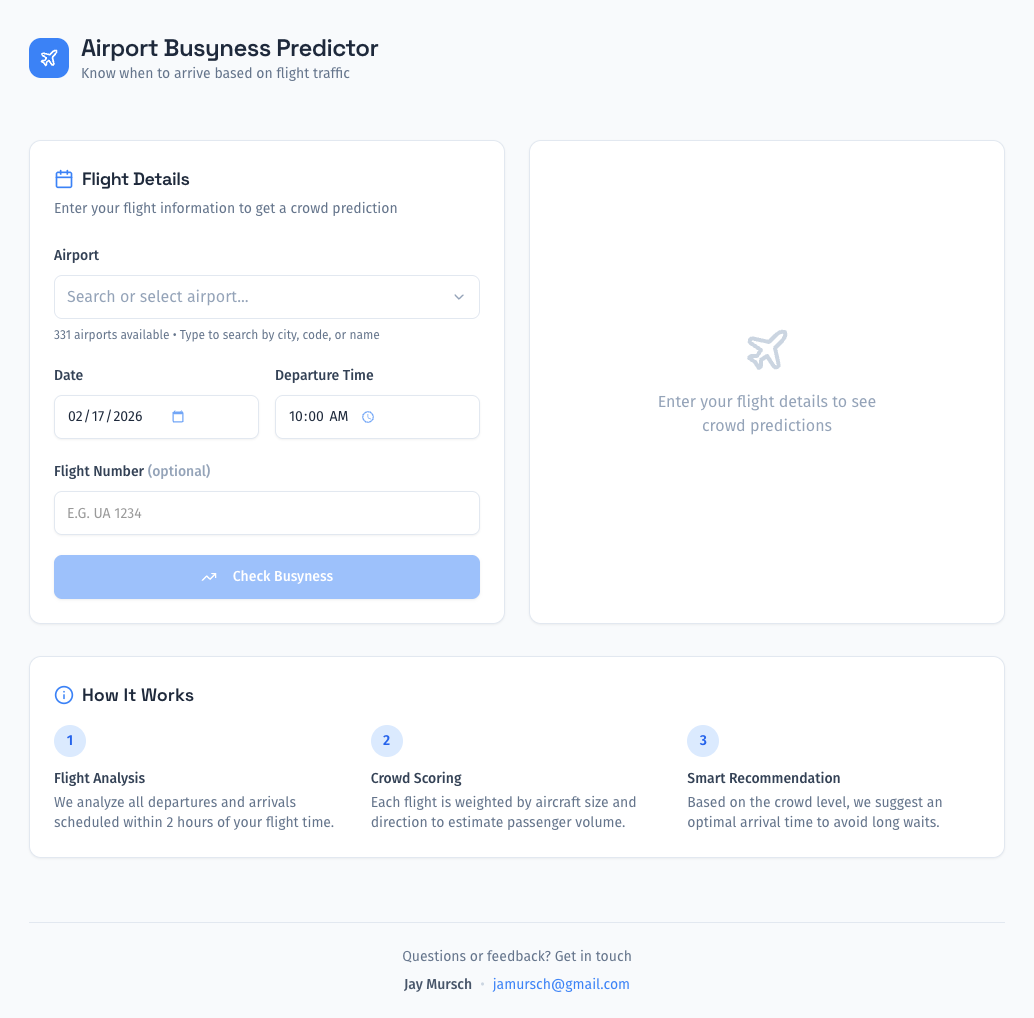
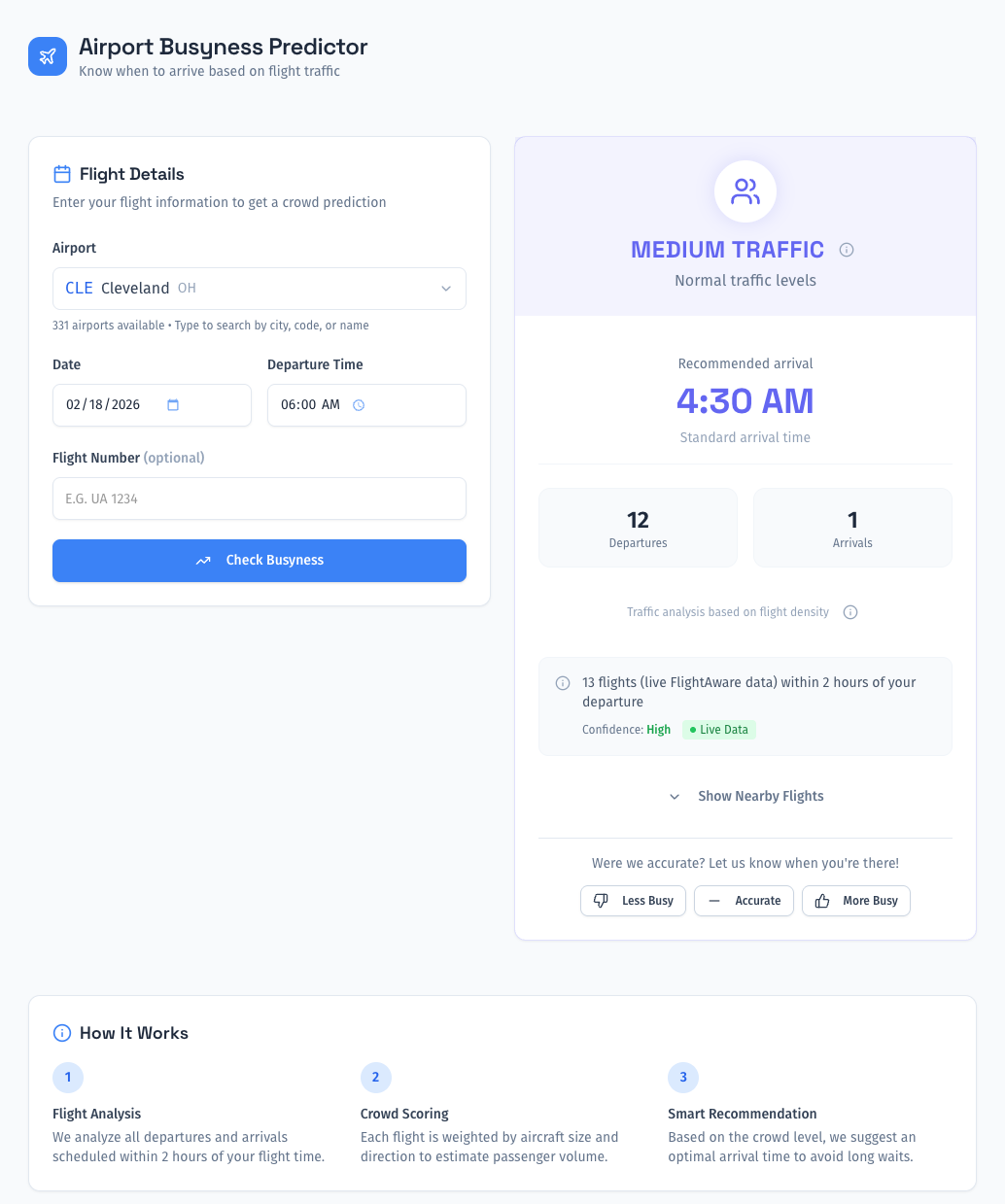
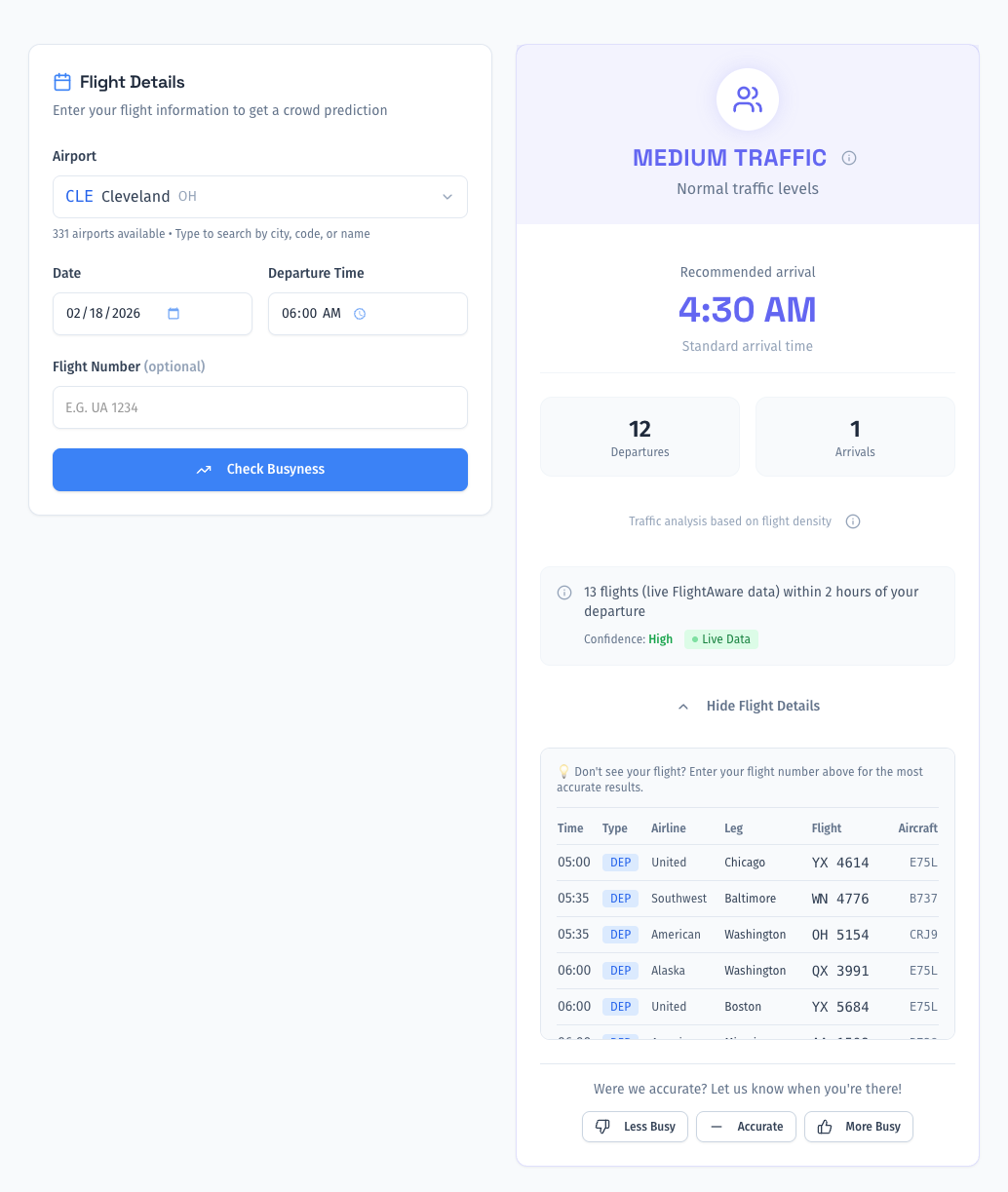
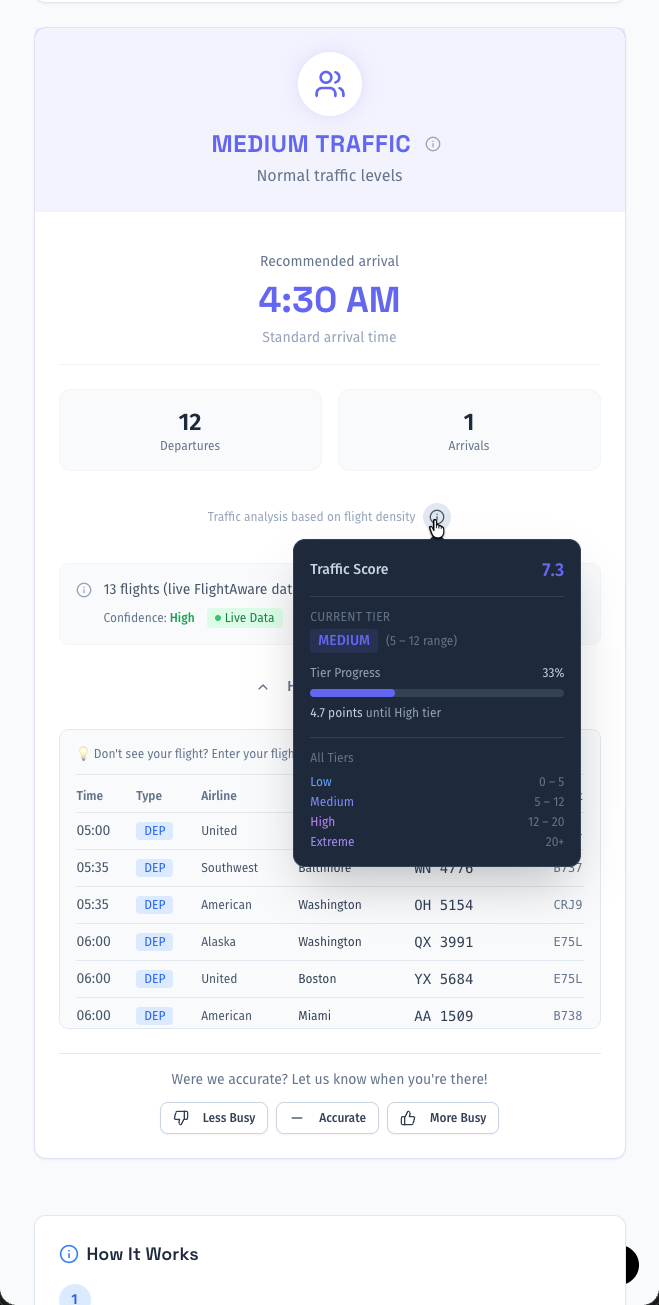
Airport Busyness (www.howbusyismyairport.com) is a concept app I designed to help travelers quickly understand how busy an airport will be at a given time, so they can better plan arrivals, security, and lounge time. I led the product from idea to prototype—researching traveler pain points, exploring real-time and historical data sources, and designing a clean, glanceable interface that surfaces expected crowds, wait times, and traffic patterns for both frequent flyers and casual travelers. I built the project on my own time as a learning experience, treating it as an experiment in prompt engineering with OpenClaw and using my technical background to deploy the app end-to-end with a custom domain so it behaved like a real, production-ready product.
Project Goals Include:
For this project, I wanted to see whether OpenClaw could turn a rough product concept into a working app using only prompts, without writing any code myself. The app pulls real flight data from FlightAware and applies a custom algorithm I designed to translate arrivals and departures into clear busyness levels, proving out both the viability of prompt‑driven development and the value of my own data modeling in the experience.
Freight Facts Design [Startup]
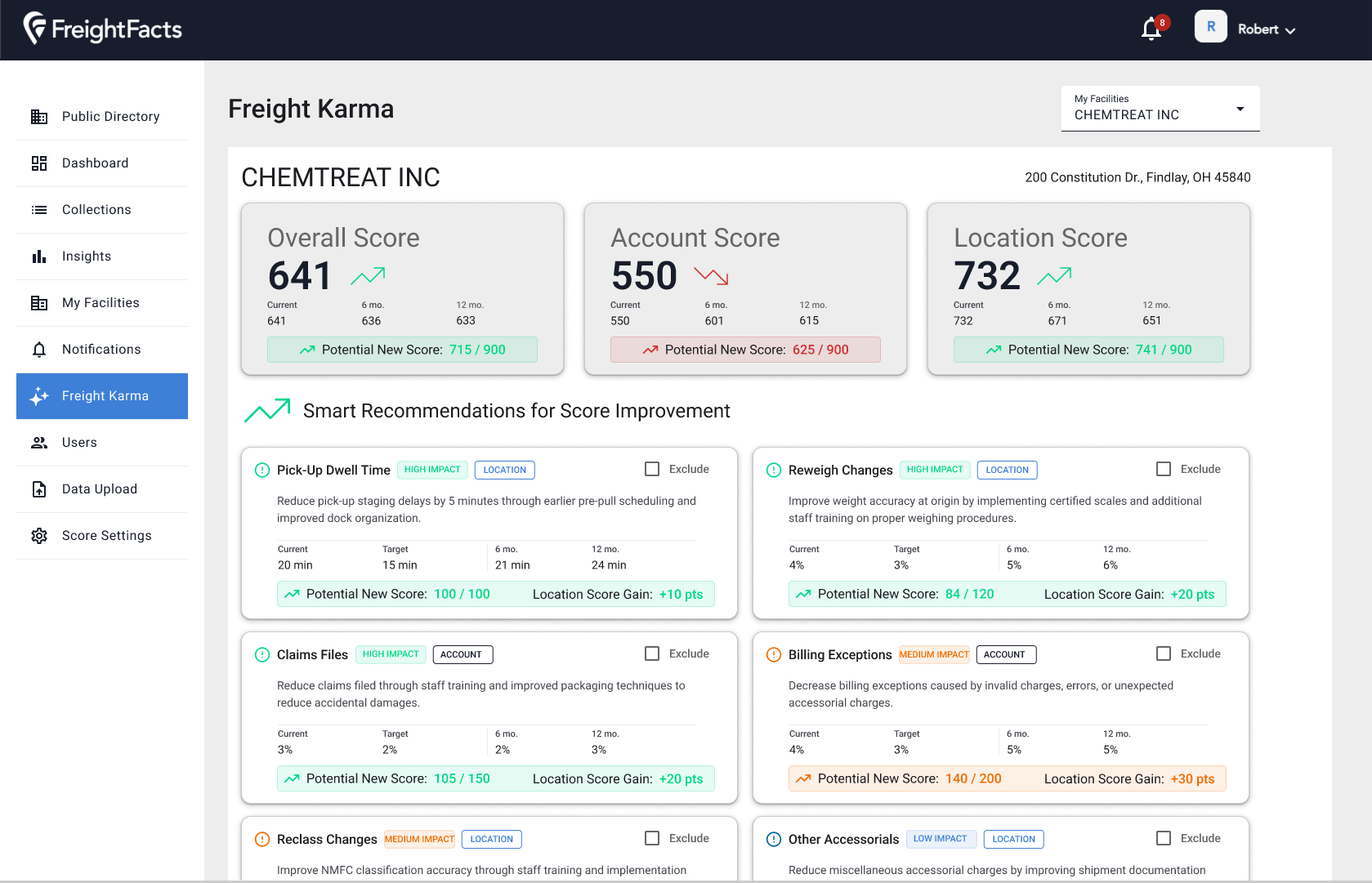
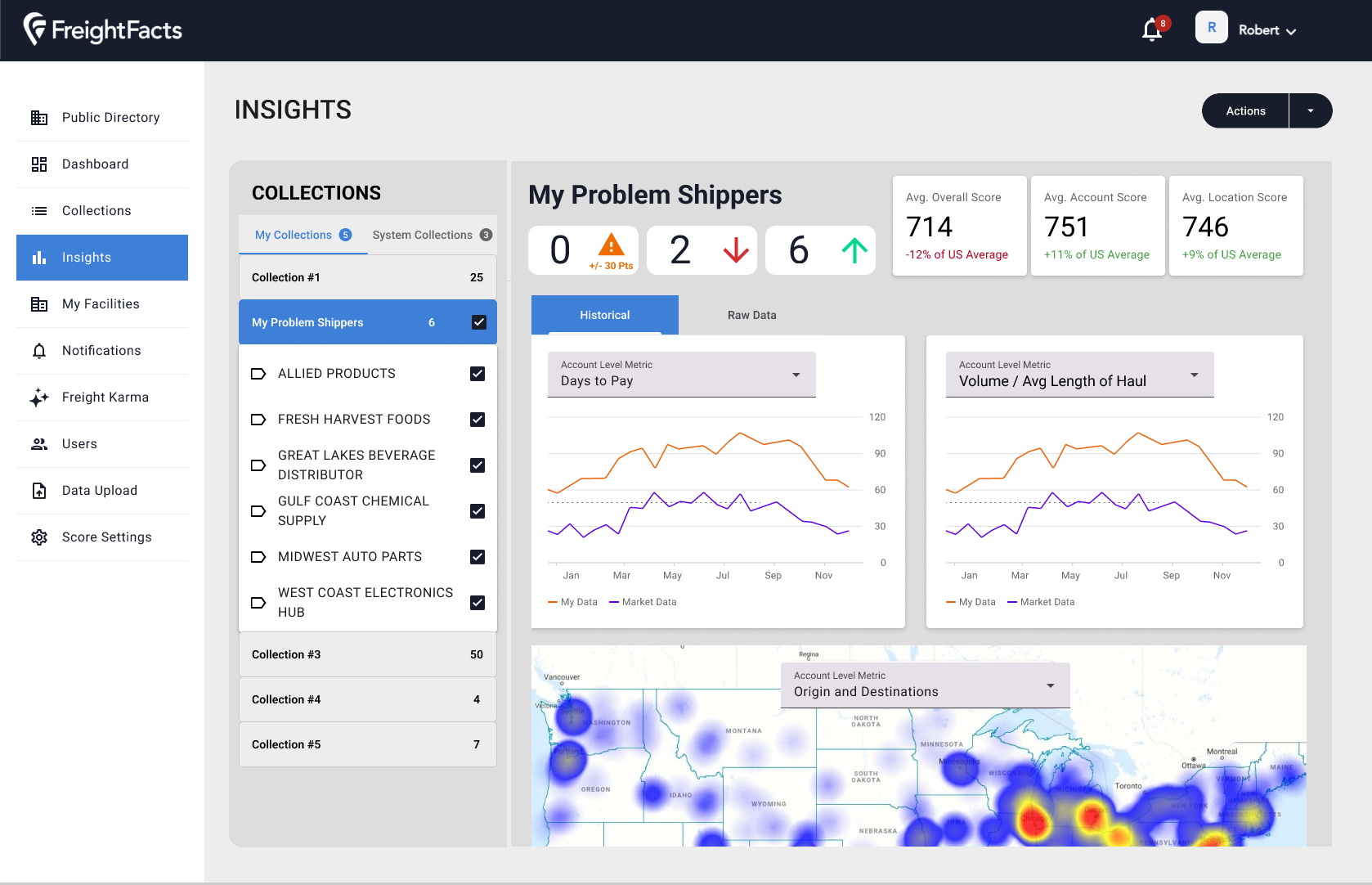
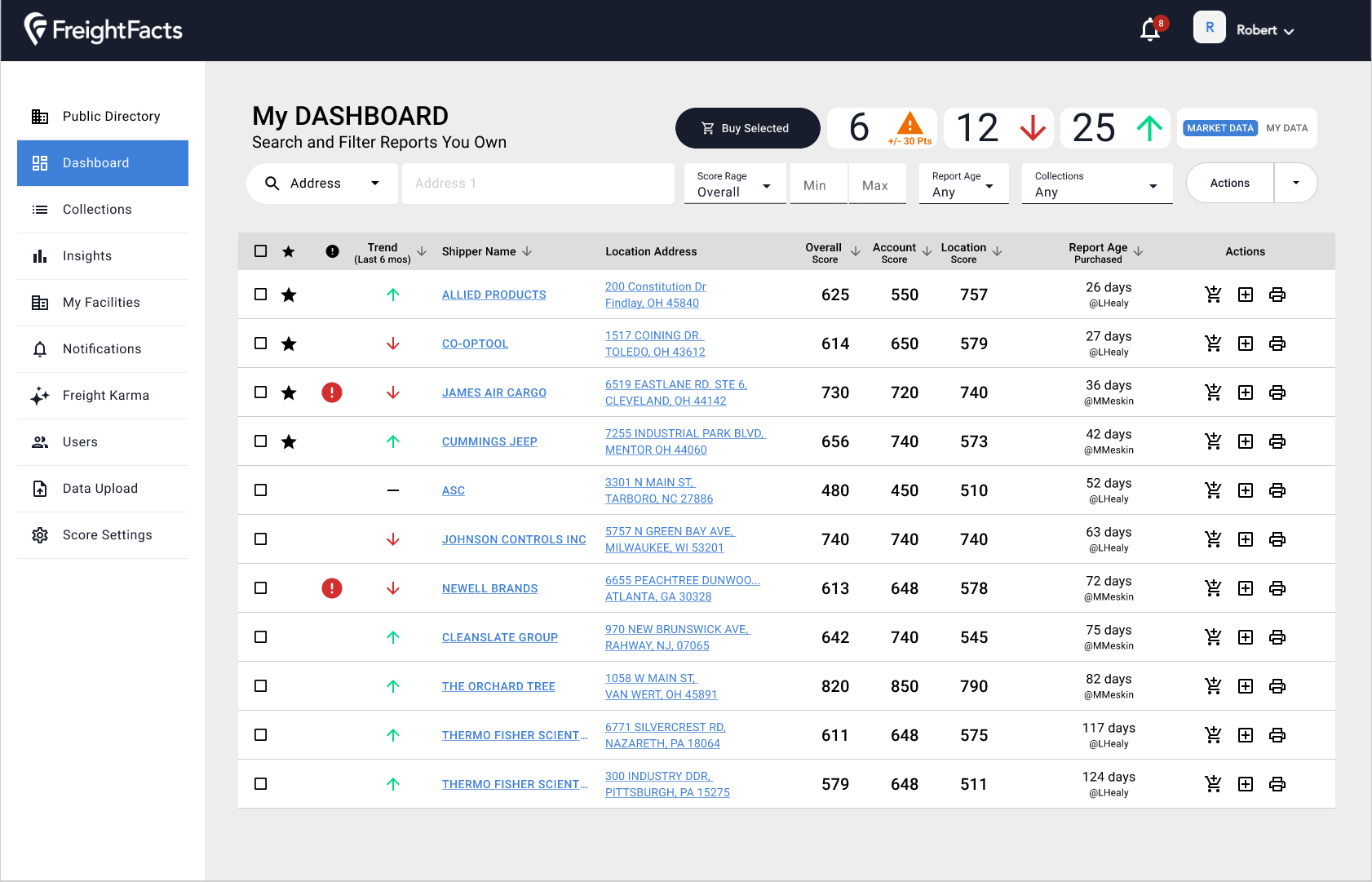
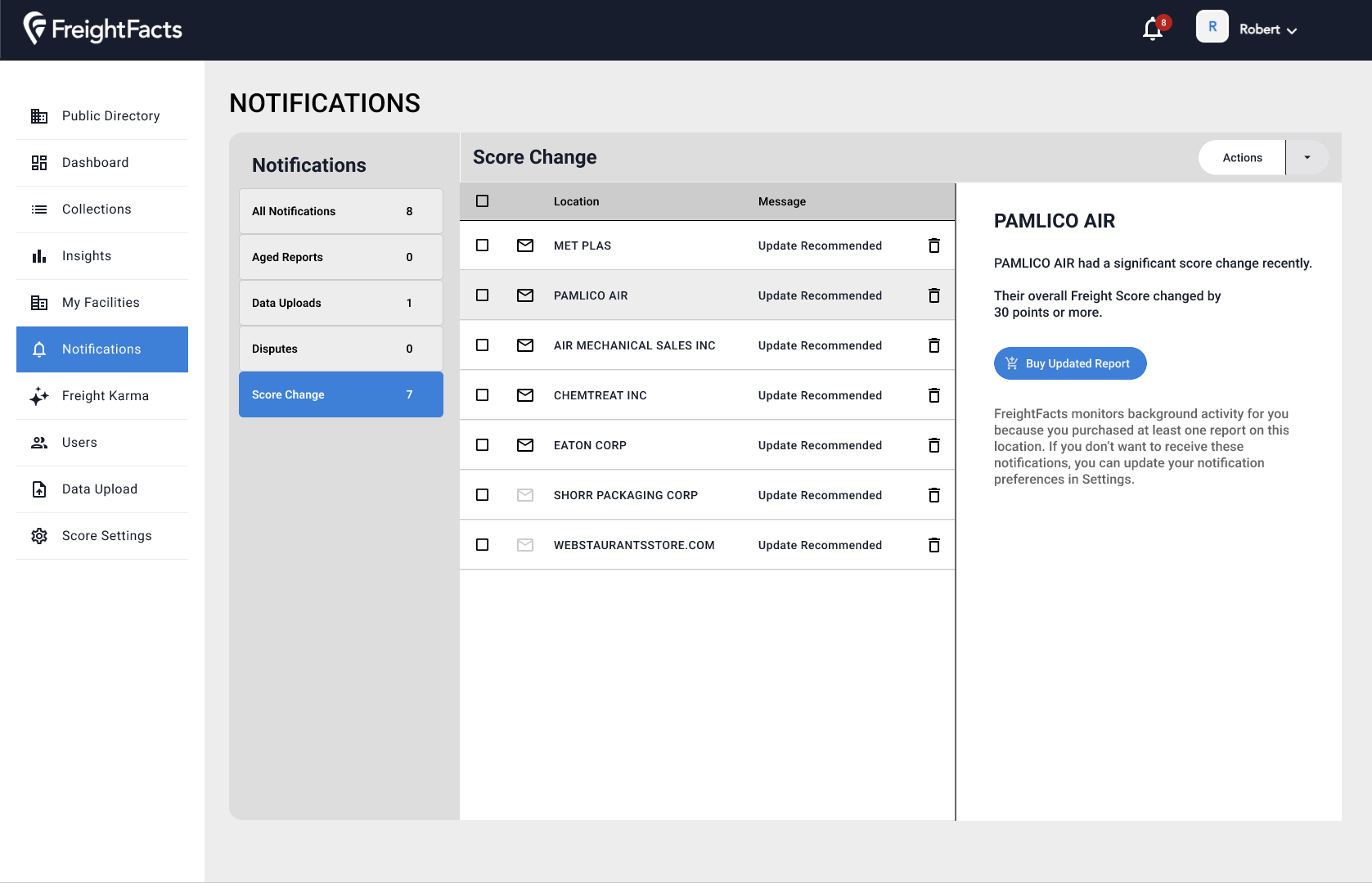
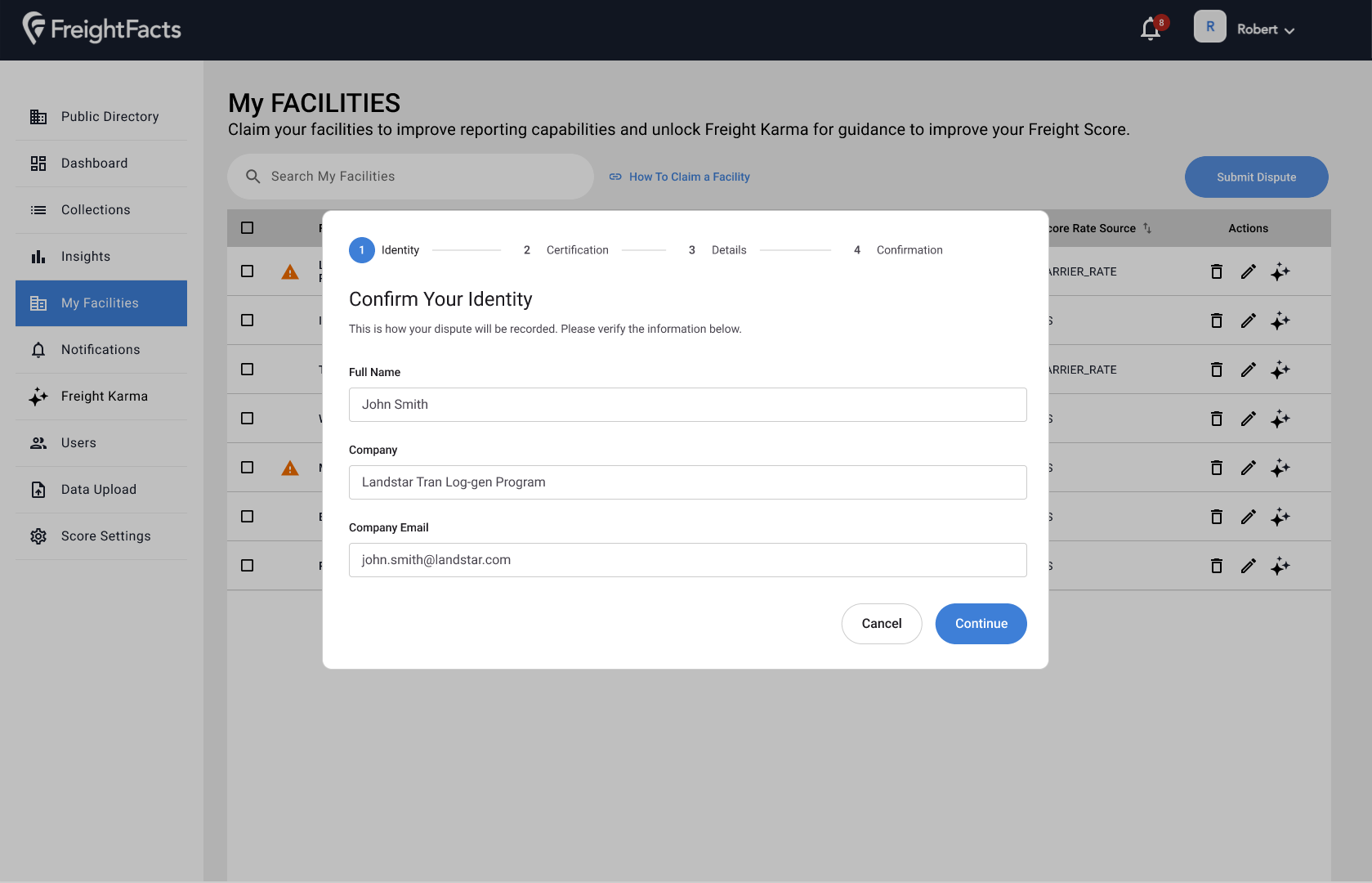
FreightFacts FreightScores is a greenfield product I took from a loose founding vision to a launched, industry-ready platform that gives carriers, 3PLs, and shippers a shared, trusted view of performance.
I led the end‑to‑end design of FreightFacts FreightScores, a startup analytics product created by three freight industry veterans to give carriers, 3PLs, and shippers a single source of truth for performance metrics. Starting from a high‑level vision of “consistent, trusted freight KPIs,” I partnered closely with the CEO, Lance Healy, to define the product strategy, map cross‑party workflows, and translate decades of tribal knowledge into a clear information architecture, metric definitions, and decision‑ready scorecards. From there, I owned the UX from discovery through delivery—conducting stakeholder and user interviews, shaping the data model with engineering, prototyping dashboard and workflow concepts in Figma, and iterating on interaction details until we had a frictionless way for each party to explore service quality, margin, and network performance from their own perspective while still aligning on a shared set of FreightScores. Throughout the project, I facilitated working sessions, validated designs, and produced development‑ready specifications that ensured the final product delivered both the trust and the technology the founders envisioned for more effective customer engagements.
Project Goals Include:
This was a greenfield engagement where I joined FreightFacts before any code existed, translating early business requirements, ideas, and concepts into a cohesive product vision and end‑to‑end UX for a company with no existing products. I was given broad creative freedom and partnered closely with CEO Lance Healy throughout the process, using my deep freight logistics experience to shape key workflows and analytics features so they reflected how carriers, 3PLs, and shippers actually operate in the real world.
Project Details
- Project Size: XXL
- AI tools used: Figma Make
- Design & Research: 18 months
- Development Mo: In-Progress
Freight Logistics Load Board [ReDesign]
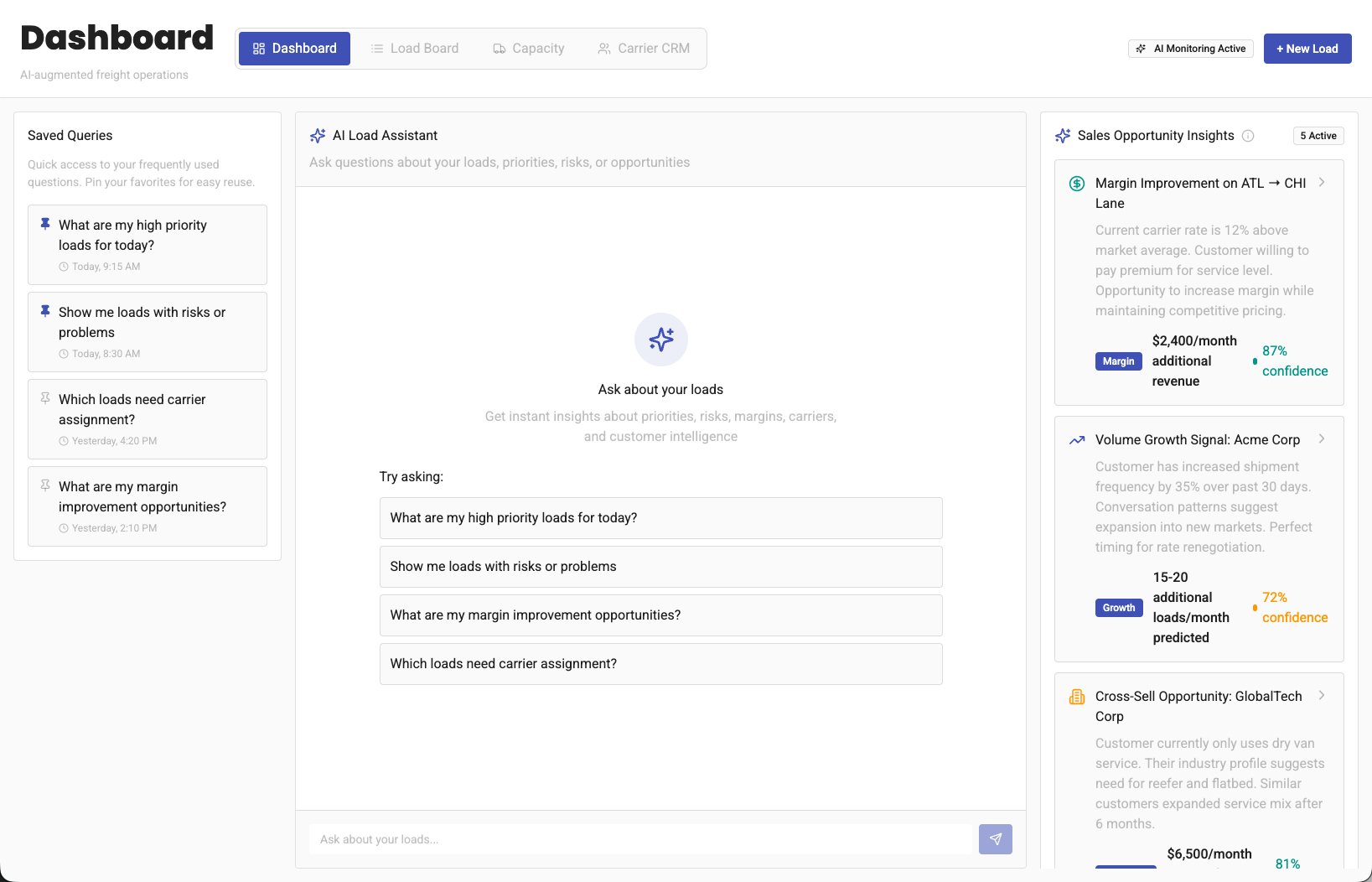
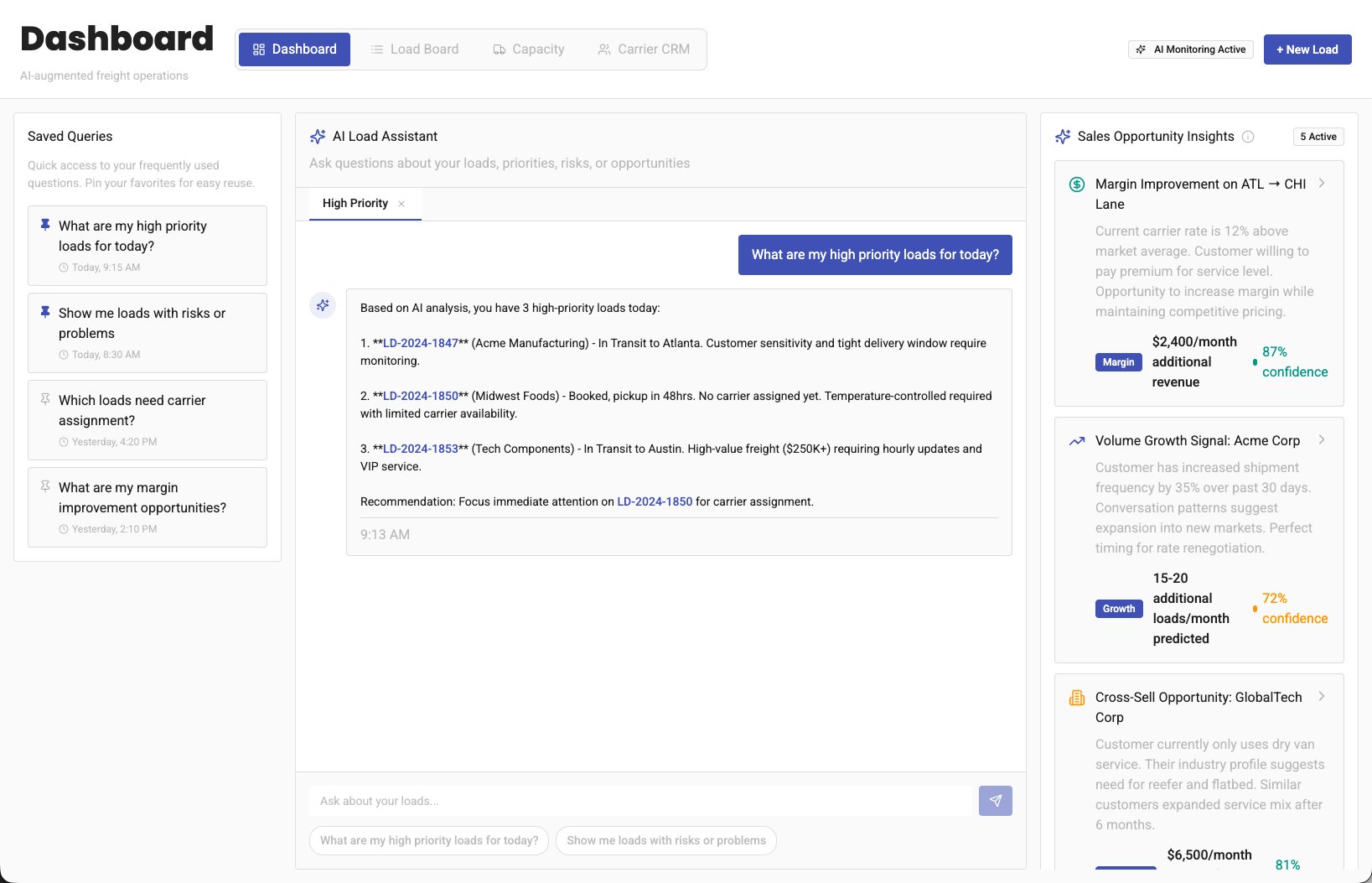
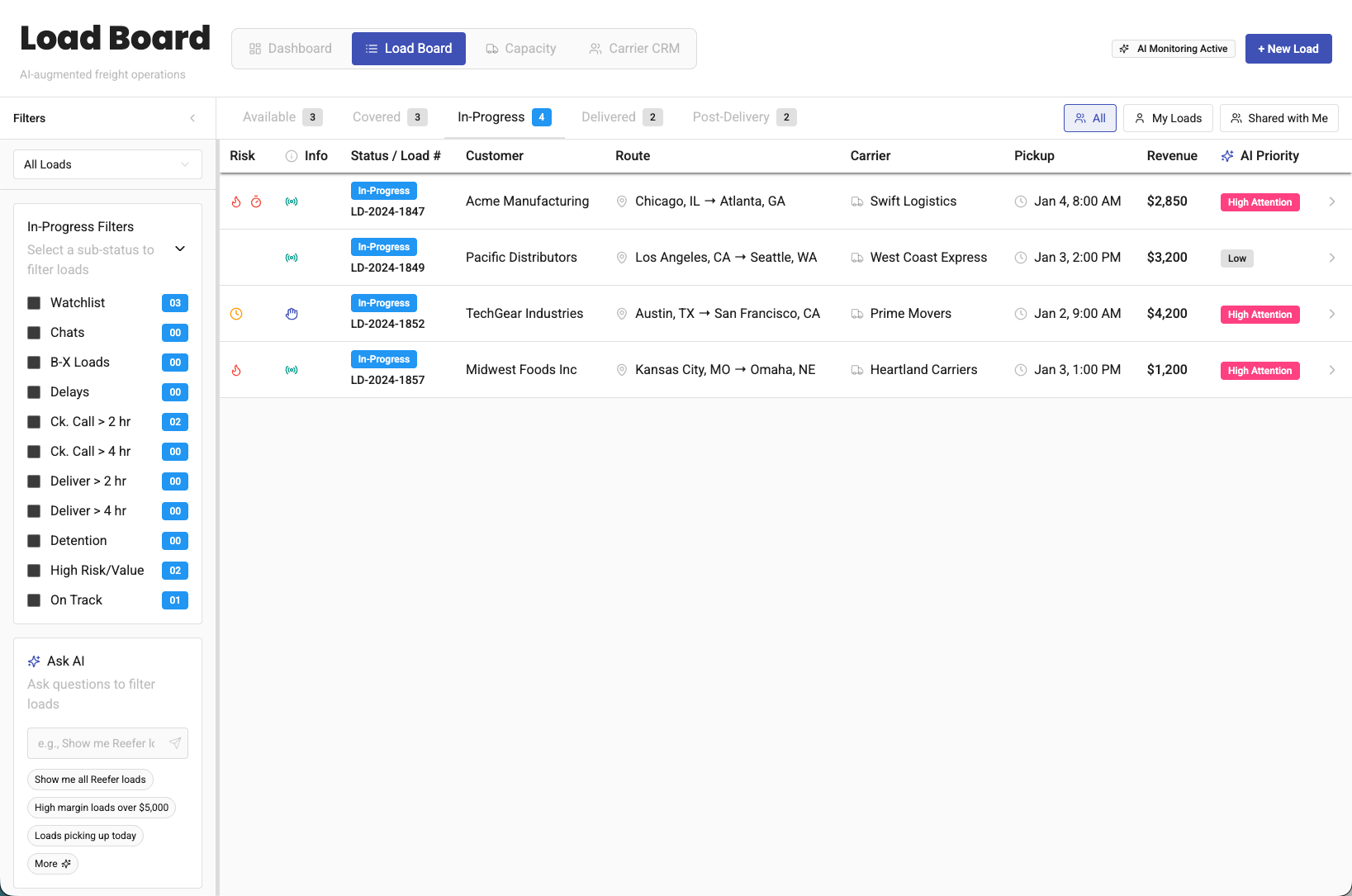
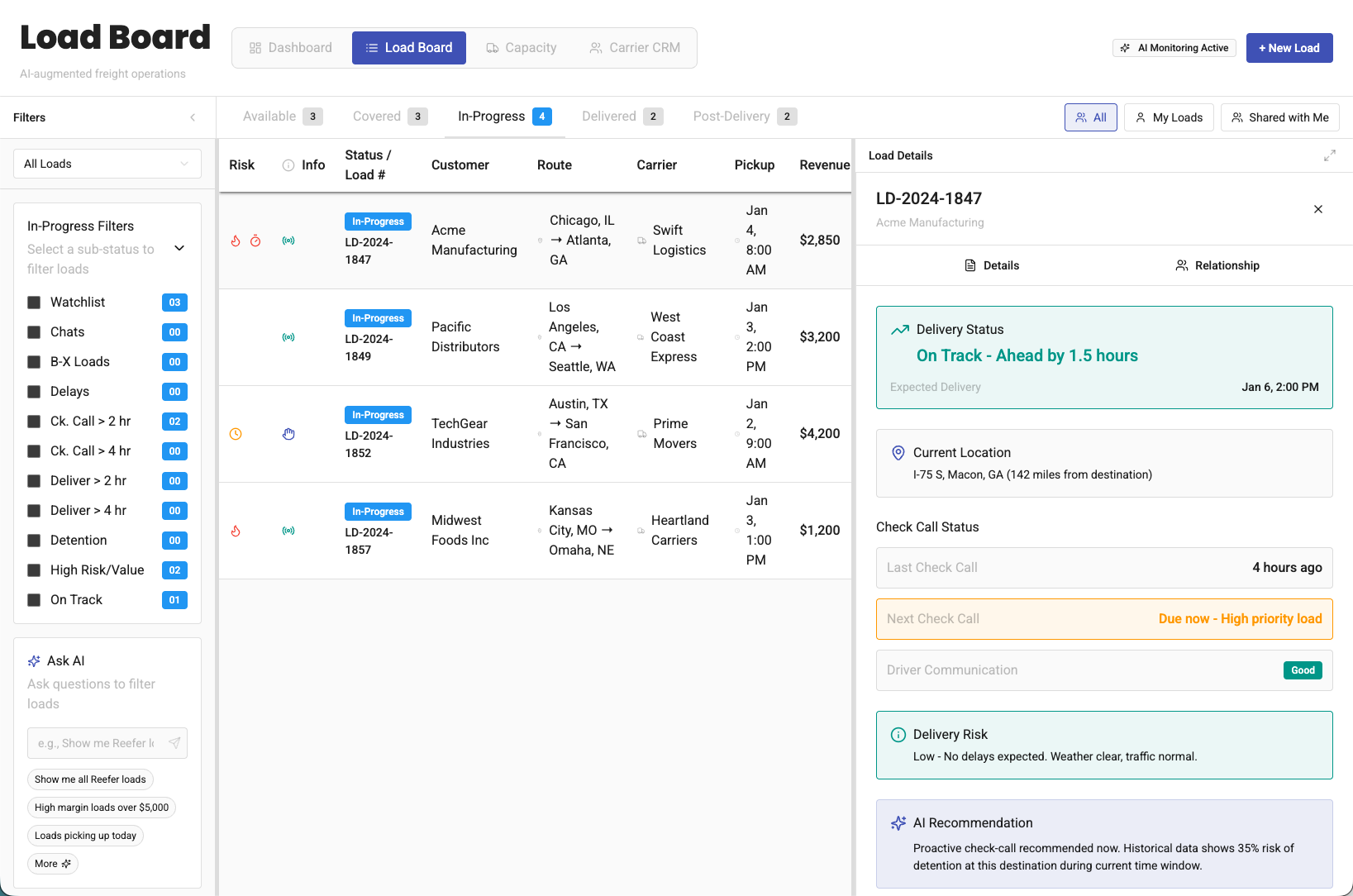
Recognizing the outdated load management system’s impact on company-wide efficiency, I led a six-month discovery and design initiative in close partnership with UX Research to address technical debt, evolving user needs, and new AI-driven opportunities. Through this work, I delivered modern, user-centric designs that not only streamline order flow and automate mundane tasks, but also leverage operational and customer data with AI to surface proactive insights. These AI insights help users strengthen relationships across their book of business by highlighting at-risk accounts, upsell opportunities, and patterns in service performance that inform timely, high-value outreach. I regularly presented the designs to engineering and business stakeholders to refine requirements, align on AI use cases, and address concerns through collaborative discussions
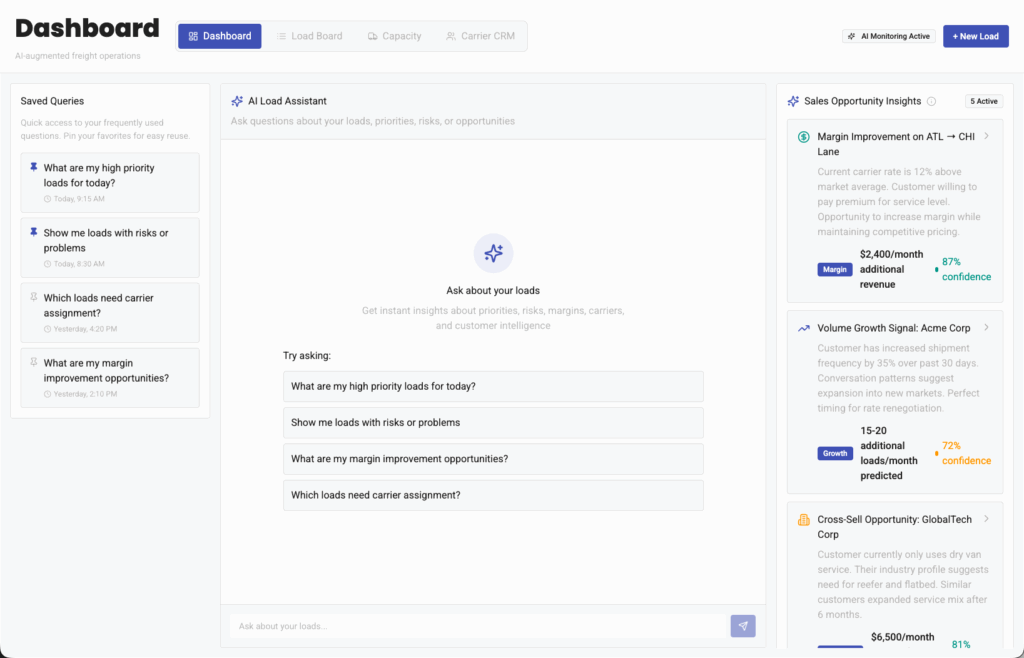
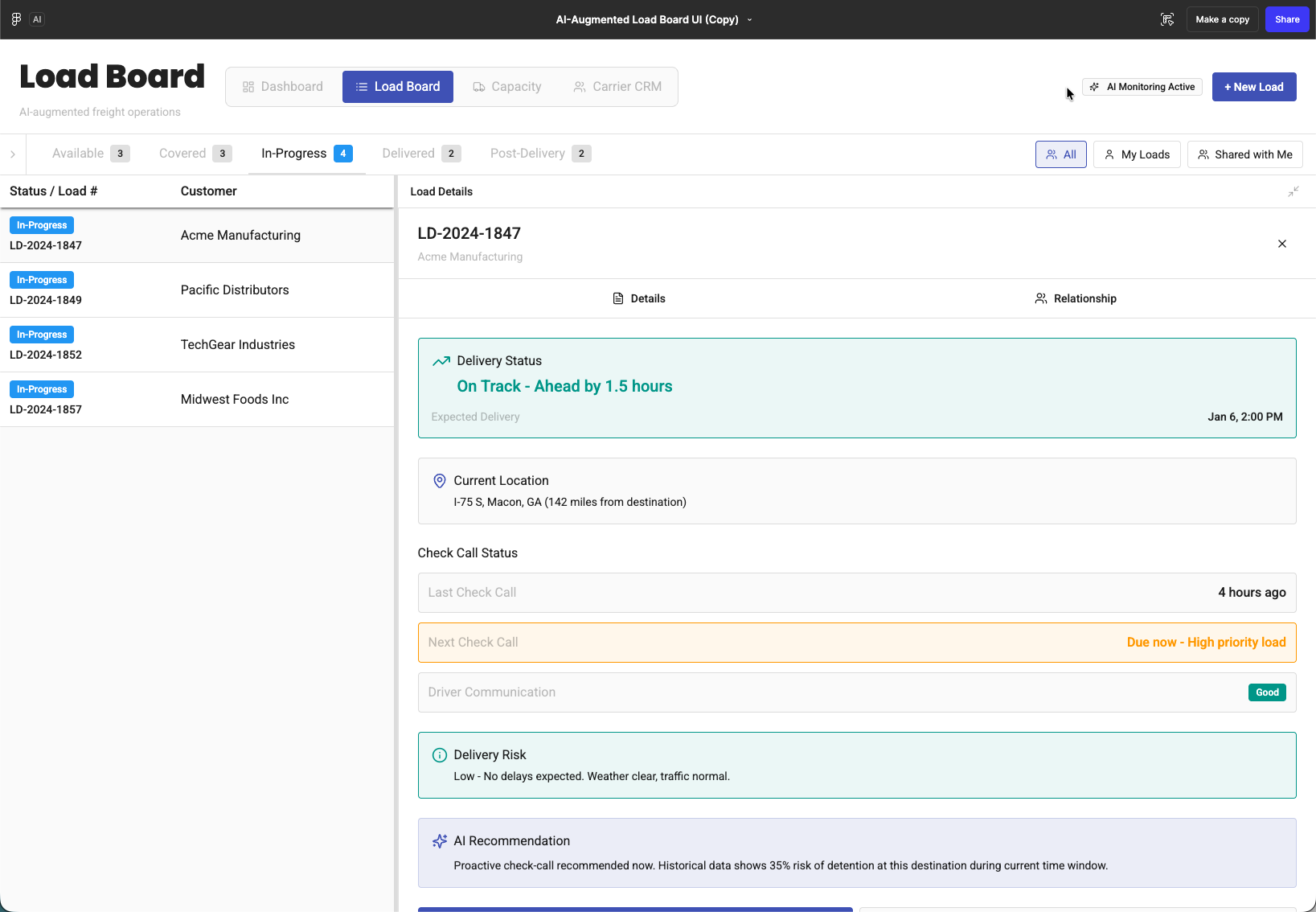
These designs illustrate an AI-powered load board experience that helps users prioritize their day and act quickly on the most important freight. The AI assistant allows users to ask natural-language questions about their book of business, returning suggested actions and high-priority loads based on operational and customer data. Users can switch between a grid view with preconfigured filters that surface loads needing immediate attention and a full-screen workspace where filters collapse, maximizing on-screen data for deep work and decision-making.
Project Goals Include:
- Leveraging internal operational and customer data with AI to automate routine tasks and surface proactive insights for users.
- Reducing technical debt by modernizing the legacy load management platform and underlying workflows.
- Understanding and optimizing users’ end-to-end processes across sales, operations, and account management.
- Identifying and addressing key user pain points that slowed order flow and impacted service quality.
- Resolving core load board inefficiencies that created bottlenecks and manual workarounds.
- Supporting individual customization needs so users could tailor views, alerts, and workflows to their book of business.
- Meeting management needs for visibility, performance insights, and better decision-making across teams.
Project Details
- Project Size: XL
- AI tools used: Cursor, Figma Make
- Design & Research: 6 months
- Num. Designers: 1 (me)
- Design Phases: 5
- Design Presentations: 8
- Num. Researchers: 1
- UXr Interviews: 50+
- UXr Hours: 80+
- Development Mo: In-Progress
Freight Logistics AI Outlook Plug-in [NEW]
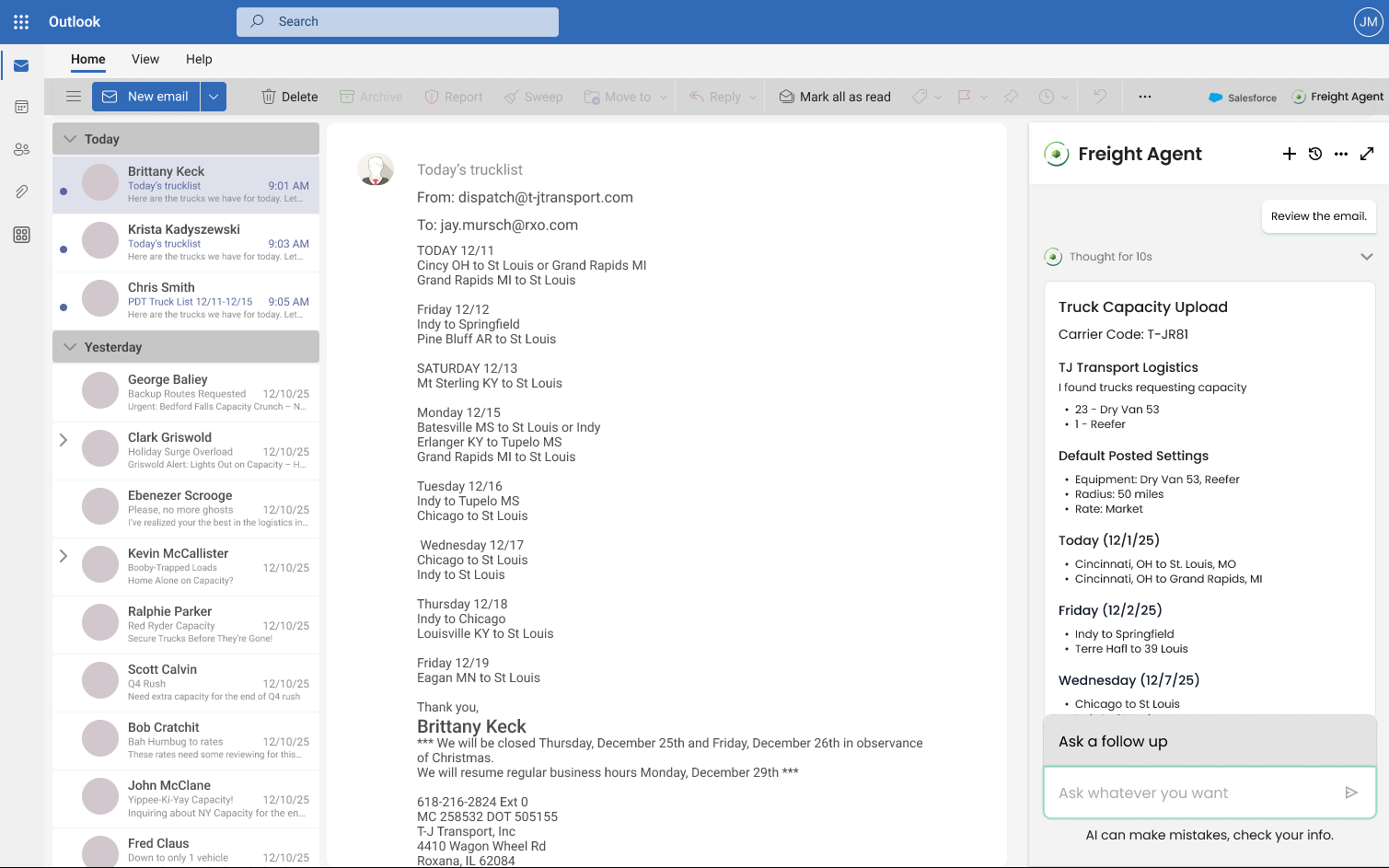
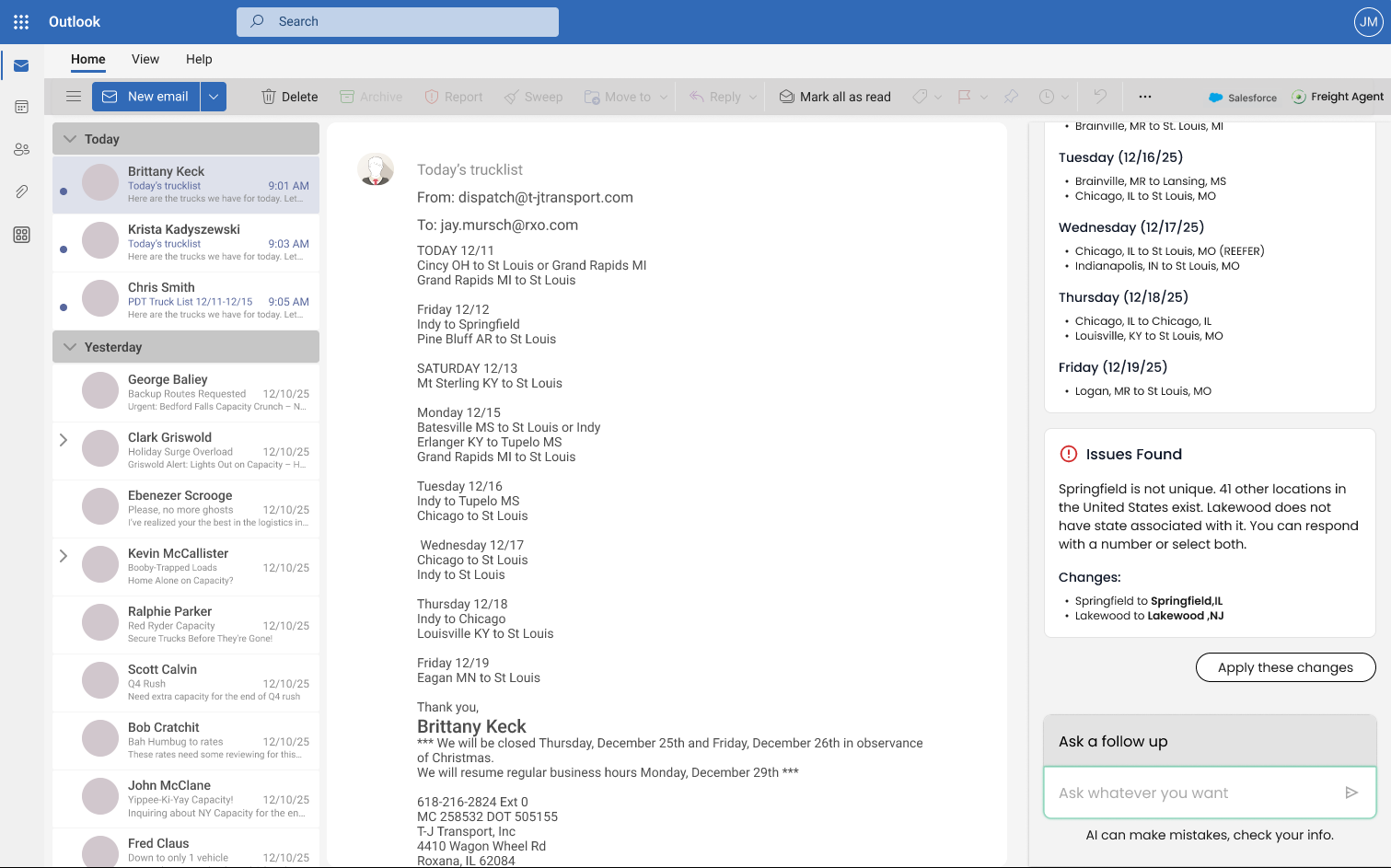
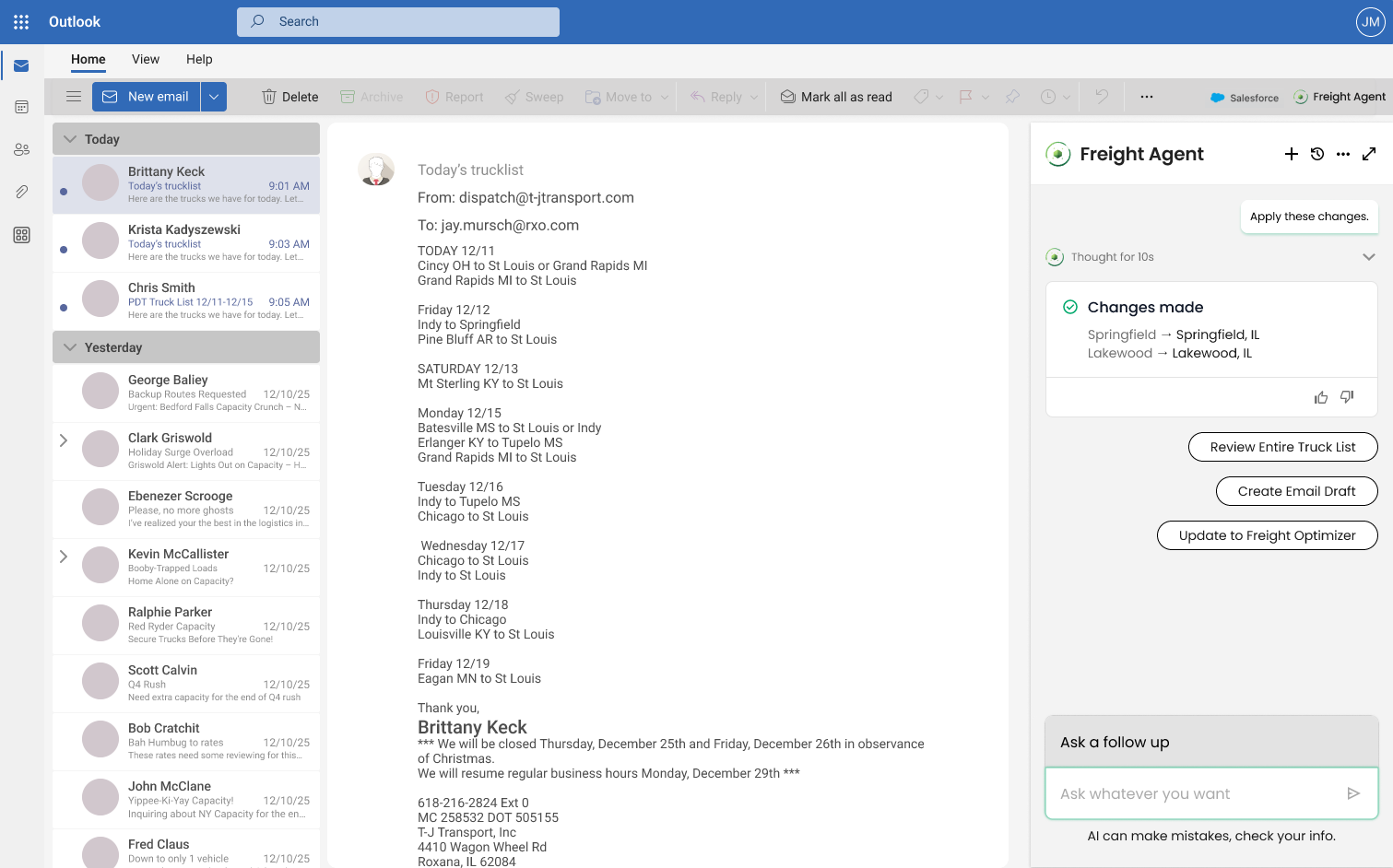
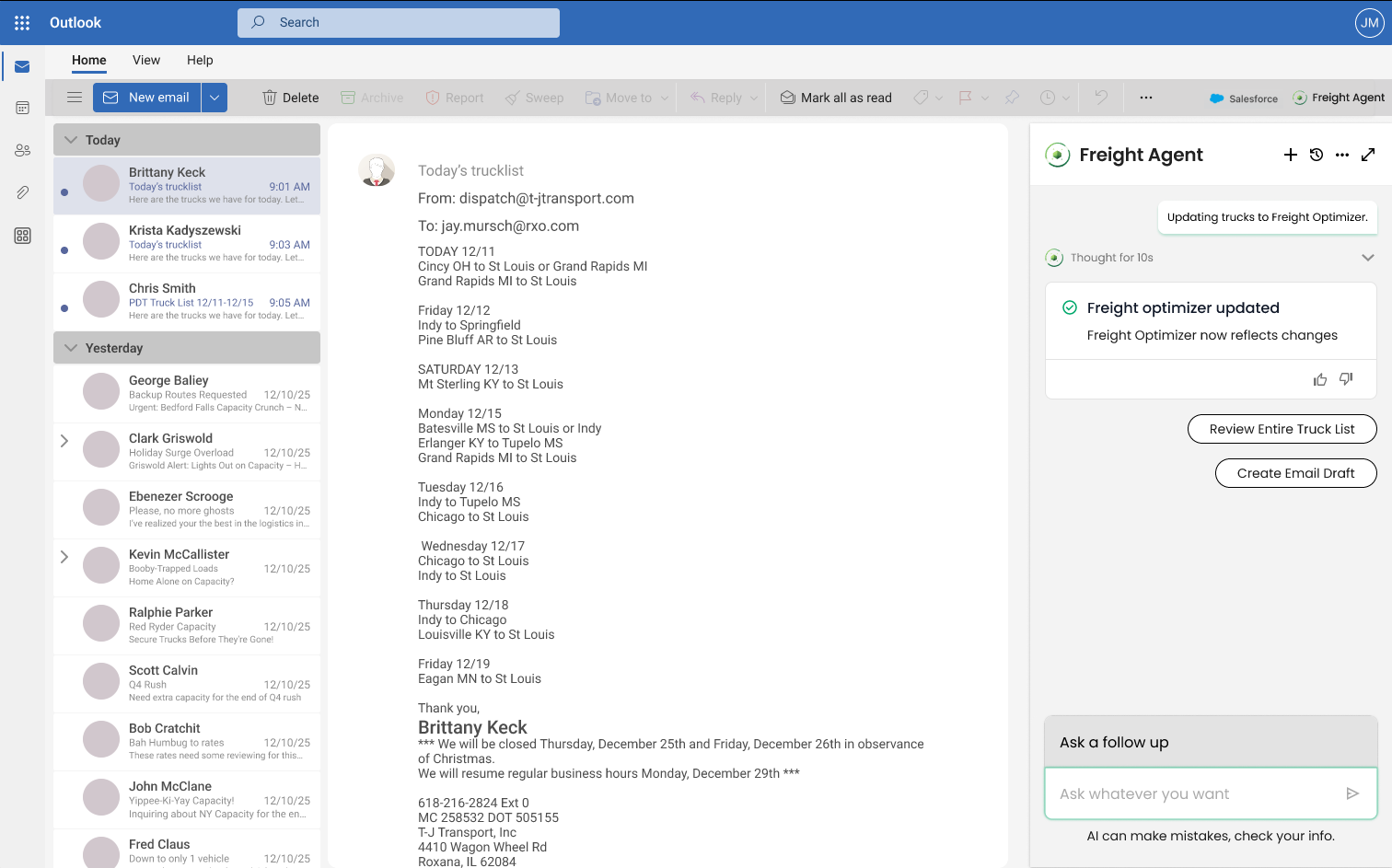
I led the design of an AI-powered assistant that reads users’ emails and automates their most repetitive freight tasks directly from their inbox. The assistant parses structured and unstructured email content to identify whether a carrier is sharing new truck capacity, a customer is requesting a spot quote, or a customer is submitting a new order, then automatically drafts and creates the corresponding records in the TMS. By turning email into structured data and workflows—uploading carrier capacity, generating spot quotes, and creating customer orders—the solution reduces manual data entry, shortens response times, and frees users to focus on relationship-building and higher-value decision-making.
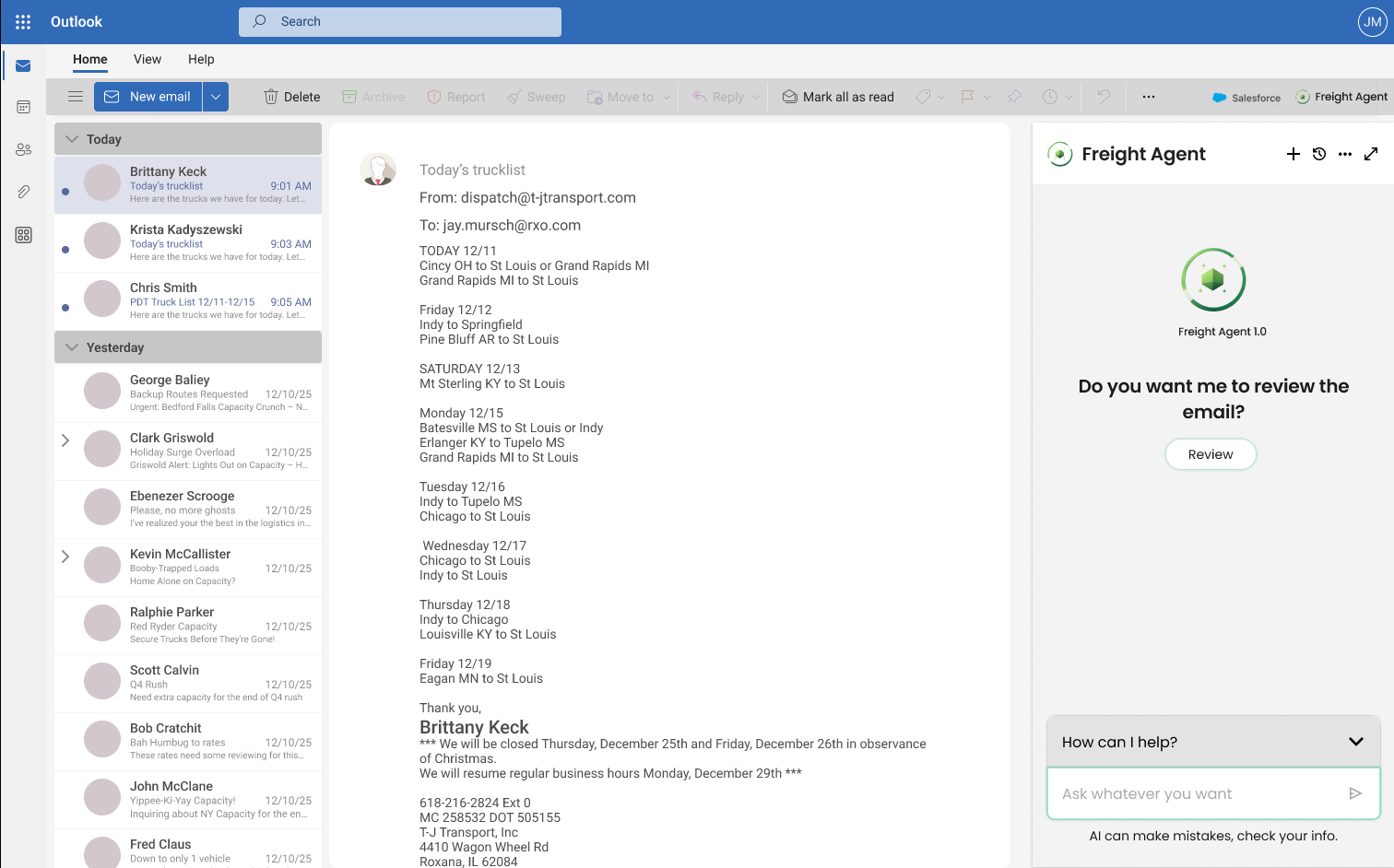
These designs illustrate an AI-powered Outlook plugin that boosts user productivity by automating time-intensive freight operations reactively from emails. When freight-related messages arrive, the plugin’s AI engine extracts structured data, validates requirements, and executes workflows like generating customer quotes, uploading truck capacity, or creating orders—all within the Outlook interface. This seamless integration eliminates context-switching and manual data entry, allowing users to review and approve actions without disrupting their email workflow.
Project Goals Include:
-
Automate time-intensive freight operations by leveraging AI to process incoming emails and execute routine tasks like spot quotes, capacity updates, and order creation without manual intervention
-
Reduce response times drastically by enabling instant processing of customer requests and carrier communications directly from the inbox
-
Eliminate context-switching by integrating freight workflows seamlessly within Microsoft Outlook, allowing users to review and approve actions without leaving their email environment
-
Increase operational capacity by freeing freight professionals from repetitive administrative tasks, enabling them to handle higher volumes and focus on strategic activities
-
Enhance customer satisfaction through faster quote turnaround times and more responsive communication
Project Details
- Project Size: XL
- AI tools used: Cursor
- Design & Research: 2 months
- Num. Designers: 1 (me)
- Num. Researchers: 0
- Number. Product Mgrs: 0
- Design Phases: 3
- Development Mo: In-Progress
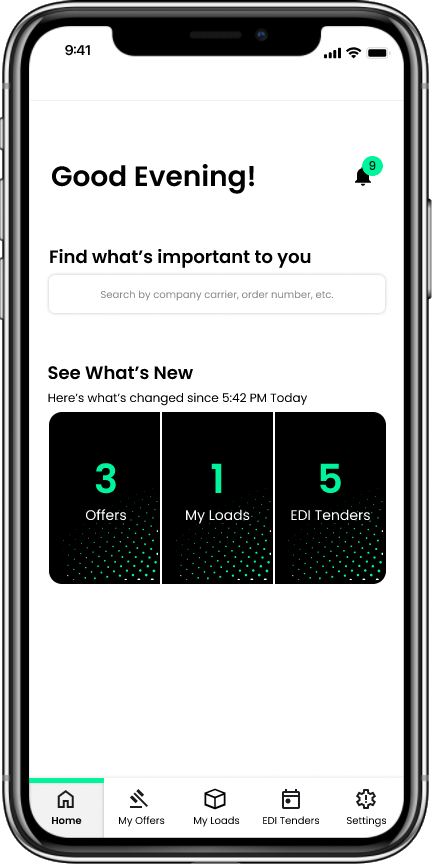
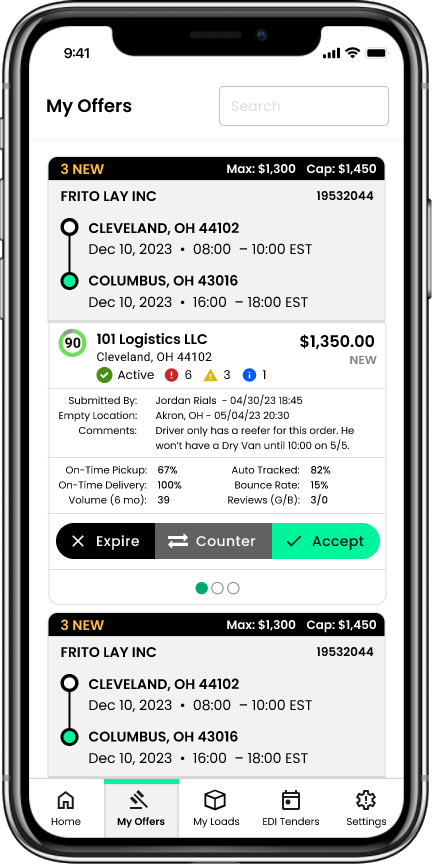
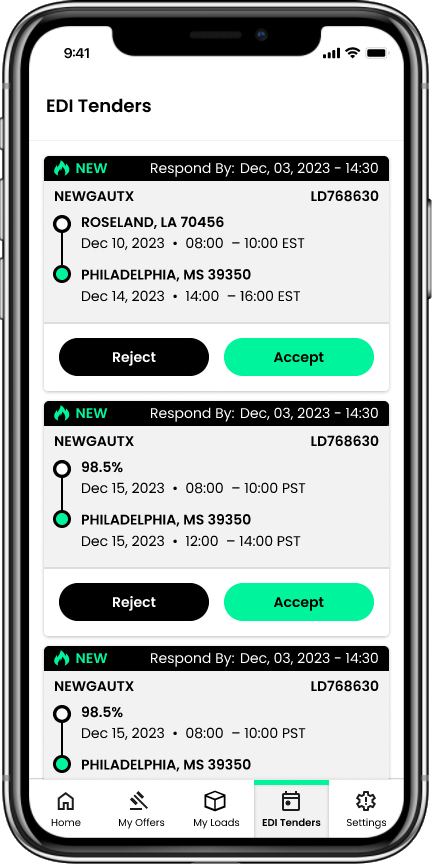
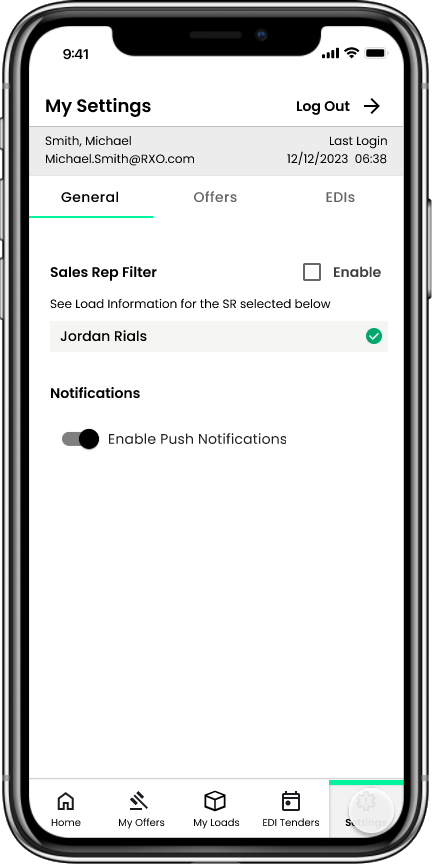
Freight Logistics Mobile Order Manager [NEW]
Many users cannot fully disconnect at the end of the day because several of their responsibilities are highly time sensitive. In 2022, I designed a mobile app concept to help manage these time-critical order duties and submitted it to the company Hack-a-thon, where it was prioritized for development. The product is now in active development, with the first feature launched in November 2023 and adoption reaching roughly 30% of eligible users by late January 2024. The next phase will focus on returning to a targeted set of users to collect qualitative feedback, refine the initial feature set, and expand support for additional time-sensitive tasks—exploring opportunities to use AI to triage urgent work, suggest next-best actions, and reduce the need to stay tethered to a laptop after hours.
Project Goals Include:
- Enabling users to manage time-sensitive order duties from anywhere, reducing the need to stay tethered to a laptop after hours
- Improving user morale by lowering after-hours stress and giving users more control over when and how they respond to urgent work.
- Increasing user productivity through focused mobile workflows and AI-powered prompts that surface the most urgent tasks first.
- Avoiding a one-to-one replication of the desktop experience, instead designing a mobile-first solution optimized for quick, high-impact actions.
- Prioritizing only the most important and urgent features for mobile, using AI to triage tasks and recommend next-best actions so users can quickly decide what truly needs their attention.
Project Details
- Project Size: XL
- Design & Research: 2-months
- Num. Designers: 1
- Design Phases: 8+
- Design Presentations: 14+
- Num. Researchers: 1
- UXr Interviews: 10+
- UXr Hours: 12+
- Development Mo: 4 months (MVP)